
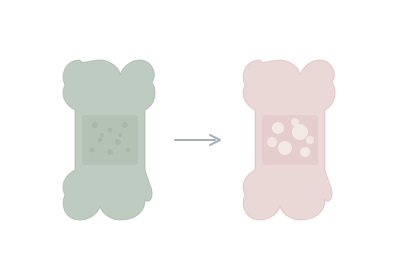
In my menopause clinic, I routinely discuss bone health because it is one of the most consequential — and most overlooked — aspects of the menopausal transition. Most women associate menopause with hot flushes, sleep disturbance, and mood changes. These symptoms are visible and immediate. But what happens to your bones is silent, gradual, and potentially devastating. Oestrogen plays a critical role in maintaining bone density, and when levels decline, bone loss accelerates dramatically. Osteoporosis affects one in three women over 50 in the United Kingdom, yet it is often not discussed until a fracture occurs — by which point significant, irreversible damage may already have been done.
The good news is that bone loss is not inevitable. With the right assessment, timely treatment, and targeted lifestyle changes, you can protect your bones for decades to come. As a gynaecologist trained in France and now practising in London, I see it as my responsibility to raise this topic proactively with every woman approaching or going through the menopause, rather than waiting for a problem to present itself.
How does menopause affect bone health?
Oestrogen supports the activity of osteoblasts — the cells responsible for building new bone. It also restrains osteoclasts, the cells that break bone down. When oestrogen levels fall during perimenopause and menopause, this carefully maintained balance tips sharply in favour of resorption. The result is accelerated bone loss. Women can lose up to 20 per cent of their bone density in the five to seven years following menopause — a rate that far exceeds the gradual age-related bone loss that affects both sexes.
What many of my patients do not realise is that this window of rapid loss is time-limited but critical. The bone lost during these years is very difficult to recover later. This is why I emphasise early assessment and, where appropriate, early intervention. Waiting until the age of 65 or 70 to think about bone health means missing the period when treatment is most effective.
Certain factors increase your risk further:
- Family history of osteoporosis or hip fracture
- Early menopause (before 45) or premature ovarian insufficiency
- Low body weight or BMI
- Smoking or excessive alcohol intake
- Prolonged use of corticosteroids (such as prednisolone for asthma or autoimmune conditions)
- A sedentary lifestyle with limited weight-bearing activity
- Conditions affecting nutrient absorption (coeliac disease, inflammatory bowel disease)
- Previous eating disorders, particularly anorexia nervosa, which can cause lasting bone damage
- Long-term use of certain medications including aromatase inhibitors, some anti-epileptics, and proton pump inhibitors
Understanding DEXA scans: what the numbers mean
A DEXA (dual-energy X-ray absorptiometry) scan is the gold standard for measuring bone mineral density. It is a quick, painless, low-radiation scan that measures density at two key sites: the lumbar spine and the hip. I recommend DEXA scans for:
- All postmenopausal women with one or more risk factors for osteoporosis
- Women who experienced early menopause (before 45) or premature ovarian insufficiency
- Women taking or who have taken long-term corticosteroids
- Anyone who has had a fragility fracture — a break resulting from a minor fall or even coughing
- Women starting HRT where bone protection is a primary indication, so that we have a baseline to track progress
Interpreting T-scores
Your DEXA result is reported as a T-score, which compares your bone density to that of a healthy young adult at peak bone mass. The interpretation is straightforward:
- T-score above −1.0: Normal bone density
- T-score between −1.0 and −2.5: Osteopenia — reduced bone density that is not yet in the osteoporosis range, but warrants monitoring and often lifestyle intervention
- T-score of −2.5 or below: Osteoporosis — significantly reduced bone density with increased fracture risk
I always explain to my patients that the T-score is just one piece of the puzzle. I also use the FRAX tool, which combines the T-score with other clinical risk factors — age, weight, smoking history, previous fractures, family history, and steroid use — to calculate a personalised ten-year probability of major fracture. This helps me and the patient make informed decisions about whether treatment is warranted.
How often should you have a DEXA scan?
For women with normal bone density and no significant risk factors, a repeat scan every three to five years is usually sufficient. For those with osteopenia, I typically recommend a repeat at two to three years to assess the rate of loss. If a woman is on treatment for osteoporosis, I usually repeat the scan at two years to confirm that the treatment is working. Context matters, and I always individualise the monitoring schedule.
The role of HRT in bone protection
Hormone replacement therapy (HRT) is the most effective treatment for preventing menopausal bone loss. Current guidance from the British Menopause Society and NICE supports the use of HRT for osteoporosis prevention in women at increased risk, particularly when started within ten years of menopause onset.
Which types of HRT are best for bones?
All systemic oestrogen-containing HRT regimens offer bone protection, but some are particularly well evidenced. In my practice, I most commonly prescribe:
- Transdermal oestradiol patches or gel combined with micronised progesterone (for women with a uterus). This body-identical regimen is well tolerated, carries a lower risk of venous thromboembolism than oral preparations, and provides reliable bone protection.
- Oral conjugated oestrogens or oestradiol, which have the longest track record of evidence for fracture reduction. The Women's Health Initiative trial demonstrated a significant reduction in hip and vertebral fractures with oral HRT.
- Tibolone, a synthetic steroid with oestrogenic, progestogenic, and weak androgenic activity, which has been shown to improve bone density and reduce fracture risk. It is sometimes preferred by women who also have low libido, as the androgenic component can support sexual desire.
Body-identical HRT — which uses hormones structurally identical to those produced by the ovaries — is well-tolerated by most women and offers benefits that extend well beyond bone health: cardiovascular protection, improved mood and sleep, and a better quality of life overall. For more on what the evidence really says about HRT, see our guide to HRT myths and facts.
The key is early assessment and an individualised approach. HRT is most effective when started during the perimenopause or early postmenopause, before significant bone loss has occurred. A functional medicine approach can also help identify nutritional deficiencies — such as vitamin D, magnesium, or vitamin K2 — that contribute to bone loss.
Bisphosphonates: when I consider them
For women who cannot take HRT, or for whom HRT alone is insufficient, bisphosphonates are the most commonly prescribed class of medication for osteoporosis. These drugs work by slowing the activity of osteoclasts, the cells that break down bone. The most widely used options include alendronate (a weekly oral tablet) and risedronate (weekly or monthly). For women who struggle with oral bisphosphonates, intravenous zoledronic acid (given once yearly) is an alternative.
I find that many patients are concerned about bisphosphonates, particularly regarding rare side effects they may have read about online, such as osteonecrosis of the jaw or atypical femoral fractures. I always take time to discuss these concerns openly. The reality is that these complications are extremely rare — affecting fewer than one in 10,000 patients per year — and must be weighed against the very real and common risk of osteoporotic fractures. A hip fracture in an older woman carries a mortality rate of approximately 20 per cent within a year, and many survivors never regain full independence. The benefit-to-risk ratio of bisphosphonate treatment is overwhelmingly favourable for women with established osteoporosis.
I typically consider bisphosphonates when:
- The T-score is −2.5 or below, or the FRAX score indicates a high ten-year fracture risk
- A woman has already sustained a fragility fracture
- HRT is contraindicated or the patient prefers not to use it
- Bone loss is continuing despite HRT and lifestyle measures
Treatment duration is usually reviewed after three to five years. I discuss the concept of a drug holiday with patients, during which the medication is paused while the bone-protective effect persists, before reassessing whether to restart.
Lifestyle factors: beyond calcium
Whether or not you take HRT or bisphosphonates, the following lifestyle factors make a meaningful and measurable difference to bone health. I discuss these with every patient in my menopause clinic:
Weight-bearing and resistance exercise
This is the single most important modifiable lifestyle factor for bone health. Bone responds to mechanical loading — the stress placed on it by gravity and muscle contraction. I recommend two to three sessions per week of resistance training, focusing on compound movements such as squats, lunges, deadlifts, and resistance band work. Walking, jogging, dancing, and stair-climbing also stimulate bone maintenance. Swimming and cycling, while excellent for cardiovascular fitness, do not load the skeleton in the same way and are not sufficient for bone protection on their own.
Vitamin D
Vitamin D is essential for calcium absorption from the gut. In the UK, where sunlight is insufficient for adequate vitamin D synthesis for much of the year, supplementation is important for most women. I generally recommend 1,000 to 2,000 IU daily, and I check vitamin D levels as part of my initial assessment. Some women, particularly those with darker skin, obesity, or limited sun exposure, may need higher doses to reach adequate levels (typically above 75 nmol/L).
Calcium
Aim for 700 to 1,200 mg daily, ideally through diet — dairy products, leafy green vegetables, fortified plant milks, almonds, sardines, and tinned fish with bones. I prefer dietary calcium over supplements where possible, as there is some evidence that very high-dose calcium supplementation may be associated with cardiovascular risk. If supplements are needed, I advise taking them in divided doses with food.
Protein
Adequate protein intake supports muscle mass, which in turn protects bones and reduces fall risk. I encourage my patients to aim for at least 1 to 1.2 grams of protein per kilogram of body weight daily, distributed across meals. This becomes increasingly important as we age.
Other nutrients
Magnesium, vitamin K2, and zinc all play supporting roles in bone metabolism. A functional medicine assessment can identify specific deficiencies that may be contributing to bone loss, allowing for targeted supplementation rather than a one-size-fits-all approach.
Reducing fall risk
For women with established osteopenia or osteoporosis, preventing falls is just as important as strengthening bone. I recommend balance exercises such as tai chi or single-leg stands, regular vision checks, sensible footwear, and home safety measures such as removing trip hazards and installing grab rails in bathrooms. This is a conversation I have with every patient at risk.
Key insight: The five to seven years following menopause represent a critical window for bone health. Up to 20 per cent of bone density can be lost during this period. Early assessment with a DEXA scan, combined with timely intervention through HRT, lifestyle changes, and where necessary bisphosphonates, can prevent fractures and preserve independence for decades. Do not wait for a fracture to start the conversation.
Concerned about your bone health? Book a menopause and bone health assessment to understand your risk and explore your options.
Book a ConsultationMedically reviewed by Dr. Victoire Kotur de Castelbajac, Medical Gynaecologist (GMC No. 7982441) — Last reviewed March 2026
Sources & Further Reading
- NICE Menopause Guideline (NG23) — Includes guidance on bone health management and HRT for osteoporosis prevention
- Royal Osteoporosis Society — UK charity and clinical authority on osteoporosis prevention and treatment
- NHS: Osteoporosis — NHS patient information on osteoporosis causes, risk factors, and prevention