
Perimenopause often begins much earlier than most women expect. While the average age of menopause in the UK is 51, hormonal changes can start in your early to mid-40s — sometimes even in your late 30s. Because many of the symptoms are not the classic hot flushes you might associate with menopause, they are frequently misattributed to stress, ageing, or mental health conditions. In my clinic, I regularly see women in their early 40s who have been prescribed antidepressants or referred for cardiac investigations when the underlying cause was fluctuating oestrogen all along.
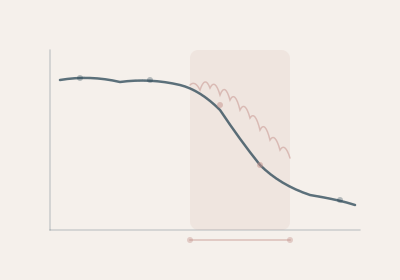
The full spectrum of symptoms
Most women know about hot flushes and irregular periods. But the symptom list for perimenopause is far longer and stranger than most people realise. Beyond the well-known signs, perimenopause can bring:
- Anxiety and panic attacks: Often appearing for the first time, with no obvious external trigger. As I explore in my article on menopause and mental health, these mood changes are directly linked to hormonal shifts. I see women who have never been anxious in their lives suddenly unable to walk into a supermarket.
- Rage and irritability: Disproportionate emotional reactions that feel completely out of character
- Joint and muscle pain: Generalised aching that appears seemingly overnight, often mistaken for early arthritis. Oestrogen has anti-inflammatory properties, and as it declines, joint tissues lose that protection.
- Heart palpitations: A fluttering or pounding sensation in the chest that can be genuinely frightening. These are almost always benign and linked to oestrogen fluctuations, though they should be checked if persistent.
- Tinnitus: A ringing or buzzing in the ears that some women find deeply disruptive
- Electric shock sensations: Brief, sharp jolts that travel across the skin — an unusual but recognised perimenopausal symptom
- Difficulty sleeping: Waking at 3 or 4 am and being unable to fall back asleep, even without night sweats — a pattern I discuss in detail in my article on sleep and hormones
- Brain fog and word-finding difficulty: Struggling to recall names, losing track mid-sentence. This terrifies many women, but it is a hormonal symptom, not early dementia.
- Weight gain around the middle: Despite no change in diet or exercise — addressing insulin resistance through lifestyle strategies can help manage this shift
- Reduced libido: A loss of interest in sex that can strain relationships and erode self-identity
- Urinary changes: Increased frequency, urgency, or recurrent urinary tract infections as oestrogen decline affects the urogenital tissues
What I tell my patients is that there are over 40 recognised symptoms of perimenopause. You do not need to have hot flushes to be perimenopausal. Some women never get them at all.
Why blood tests can be misleading
This is a source of enormous frustration for my patients. A woman goes to her GP with classic perimenopausal symptoms, a blood test is taken, the FSH comes back ‘normal’, and she is told she is not menopausal. This happens constantly, and it is based on a misunderstanding of the physiology.
During perimenopause, hormone levels fluctuate wildly — sometimes from day to day, sometimes within the same day. Your FSH could be elevated on Monday and completely normal on Thursday. A single blood test is a snapshot of one moment and tells you very little about the overall hormonal trajectory. The NICE guideline (NG23) is clear on this: in women over 45 with typical symptoms, blood tests are not required to make the diagnosis. Perimenopause is a clinical diagnosis, based on your symptoms and their pattern.
I do still use blood tests in specific situations — for example, if a woman is under 45 and I need to rule out premature ovarian insufficiency, or if I want to check thyroid function, which can mimic perimenopausal symptoms. But a ‘normal’ FSH in a 44-year-old with new-onset anxiety, disrupted sleep, and heavier periods should not be used to dismiss her experience.
Treatment options
The most important first step is recognition. Once perimenopause is identified as the likely cause of your symptoms, several treatment approaches can help:
- HRT (body-identical hormones): Oestrogen (usually given as a patch or gel to avoid blood clot risk) combined with micronised progesterone stabilises the hormonal fluctuations driving your symptoms. Most women notice a significant improvement within 4–12 weeks.
- Testosterone: For energy, libido, cognitive function, and muscle strength. Testosterone declines gradually from our 30s onwards, and replacement (as a cream or gel) can be transformative for women who feel they’ve ‘lost themselves’.
- CBT (cognitive behavioural therapy): Good evidence exists for CBT in managing hot flushes, sleep disturbance, and the psychological impact of perimenopause. It works well alongside HRT or as a standalone option for women who cannot or prefer not to take hormones.
- Targeted treatments: Vaginal oestrogen for dryness and urinary symptoms (safe, local, and effective), topical treatments for skin changes, and specific interventions for heavy bleeding if that is a prominent feature.
When patients ask me about the right time to start HRT, my answer is straightforward: when your symptoms are affecting your quality of life. There is no benefit to suffering through perimenopause when safe, effective treatment exists. Starting HRT during the perimenopausal years — rather than waiting until periods have stopped — is entirely appropriate and falls well within the NICE guideline recommendations.
Lifestyle changes that genuinely help
Alongside medical treatment, a few targeted lifestyle modifications can make a real difference:
- Exercise: Regular weight-bearing and resistance exercise protects bones, improves mood, and helps manage the metabolic shift that comes with declining oestrogen. I recommend at least 150 minutes of moderate activity per week, including two sessions of strength training.
- Sleep hygiene: Keep your bedroom cool (around 18°C), maintain a consistent sleep schedule, limit screen exposure before bed, and consider magnesium glycinate (200–400mg) in the evening, which can support sleep quality.
- Alcohol reduction: Alcohol worsens hot flushes, disrupts sleep architecture, and increases anxiety — all symptoms that are already heightened during perimenopause. Even modest reductions can produce noticeable improvements.
- Stress management: Chronic stress raises cortisol, which compounds the hormonal chaos of perimenopause. Whatever works for you — yoga, walking, meditation, boundaries at work — is worth prioritising.
What is normal and what is concerning
I want to offer some reassurance. The vast majority of perimenopausal symptoms, however distressing, are a normal response to hormonal change and are not dangerous. Palpitations, joint pain, brain fog, mood shifts — these are expected and treatable.
That said, certain changes do warrant investigation: very heavy or prolonged bleeding (soaking through a pad every hour), bleeding between periods or after sex — which may warrant a gynaecological ultrasound, persistent pelvic pain, and any new breast lump. These should always be assessed, because perimenopause does not protect you from other conditions, and it is easy to attribute everything to hormones when sometimes there is something else going on.
You do not need to wait until your periods have stopped to seek help. If you are in your 40s and experiencing new or worsening symptoms, perimenopause may well be the explanation — and effective treatment is available.
Think you might be perimenopausal? Book a hormonal assessment.
Book NowMedically reviewed by Dr. Victoire Kotur de Castelbajac, Medical Gynaecologist (GMC No. 7982441) — Last reviewed March 2026
Sources & Further Reading
- NICE Menopause Guideline (NG23) — National guideline covering perimenopause diagnosis and management
- British Menopause Society — Evidence-based resources on perimenopause symptoms and treatment options
- The Menopause Charity — Patient-focused resources on perimenopause symptoms and support